WIM System Accuracy and Its Significance in Real-World Applications
CAMEA's long-term experience with operating WIM Direct Enforcement stations has shown that pursuing maximum measurement accuracy is often inefficient and economically unjustified. Yet in many countries, Direct Enforcement is still wrongly associated with the belief that higher accuracy automatically means a better system. In reality, WIM is not designed for commercial weighing but for the objective and fair detection of overloaded vehicles operating under real conditions.
Economic Efficiency vs. Extreme Precision
In everyday traffic, overloaded trucks often exceed legal limits by tens of tons, so deviations of a few hundred kilograms have no practical impact on the road. Trying to measure such minor differences with extreme precision only increases costs. Since the road surface itself changes with traffic and weather, a WIM system must continuously verify its accuracy and adapt to these changing conditions
- WIM IS PRIMARILY AN OFFENSE SYSTEM DESIGNED TO PROTECT INFRASTRUCTURE UNDER REAL-LIFE CONDITIONS, NOT A STATIC SCALE
Regulatory Adoption of Pragmatic Standards
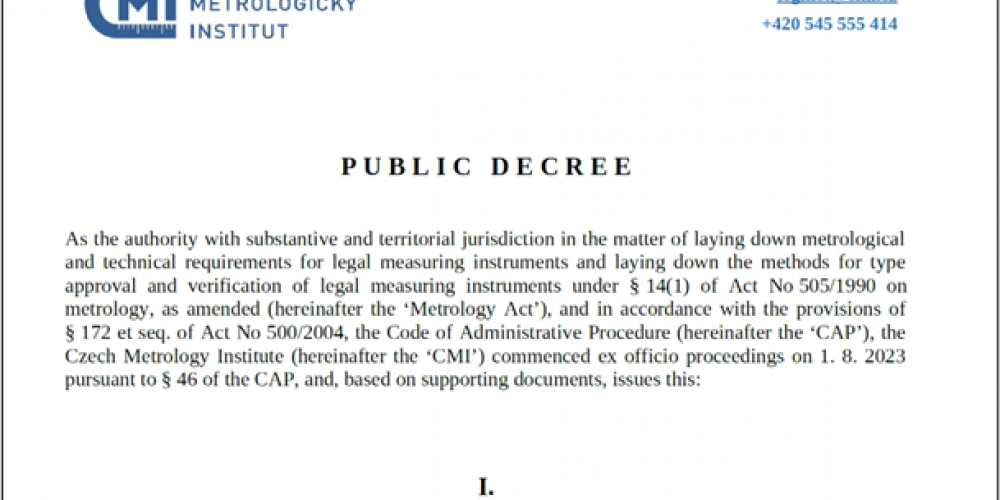
CAMEA has long promoted this pragmatic approach, so it is encouraging that the same principle has recently been adopted by the Czech Metrology Institute (CMI). This decree sets permissible errors for verification at ±5 % for gross vehicle weight and ±11 % per axle (for ruts up to 4 mm), and for operation at ±7 % and ±15 % (for ruts up to 6 mm). This represents a balanced compromise between fair enforcement and economic efficiency.
- SYSTEM ACCURACY SHOULD BE REPRESENTED BY THE CONFIDENCE LEVEL THAT STATISTICALLY APPLIES TO 95 % OF VEHICLES